
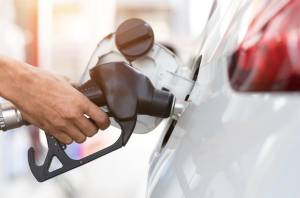
Dan McTeague has a keen eye for analyzing gas prices.
He’s been doing it for years.
And the way things are going, he sees consumers feeling the effects of turbulent energy markets for a while still.
“It would be wise for the federal government to do whatever it can to mitigate the impact of an energy crisis globally that is maintaining its grip and likely to get even stronger as far as the length in which the conflict continues and others have joined,” said McTeague, the president of Canadians for Affordable Energy and a former Liberal Member of Parliament.
McTeague’s comments come as a federal fuel tax holiday is set to end on Sept. 7.
The holiday was announced by Prime Minister Mark Carney in April, and lifted the 10-cent federal excise tax on gasoline and the four-cent-a-litre excise charge on diesel fuel.
Prices have remained high as the Trump administration’s war on Iran drags, with diesel fuel in the Edmonton area averaging around 213.9 cents a litre as of August 20th.
Prices in some parts of Calgary are in a similar range, with some stations in Calgary seen selling diesel at 214.9 cents a litre.
A statement from Sarphina Chui in the Ministry of Finance says the federal goverment will keep monitoring the pressures people are dealign with in their everyday life and work to tackle them.
“Helping Canadians manage the cost of living has driven every step of this plan, and it will always remain the priority guiding this government’s decisions in the months ahead,” said Chui.
For farmers, the four-cent-a-litre break has been in place as long as the 10-cent-a-litre break on gas. Would it be nice if it went on? Sure, notes Alberta Federation of Labour president Aaron Stein.
“A four-cent-a-litre tax holiday, 16 cents a gallon. Honestly, it’s money, but it’s not make-or-break money. 100% tariff on canola, that’s make or break money,” he said.
For McTeague, extending the fuel tax holiday amid rising prices is worth it.
Because, as far as he sees it, prices aren’t coming down any time soon, as it’s going to be hard to recover from the current glut of petroleum products caught up in the global energy crisis.
“If the federal government really wanted to do something to help consumers, they would remove the GST, HST,” said McTeague. “The compounding effect of that tax, federal and provincial, being applied to fuel is much, much more, is much more damaging to consumers than the 10 cent excise tax, which they may very well be putting back on next week.”
By David Boles, Local Journalism Initiative Reporter
Original Published on Aug 28, 2026 at 11:58

Recent Comments